There are a dozen other painted caves within a radius of about ten kilometres from Pech Merle. These are not open to the public.
Nota : None of these caves are open to the public. The map is deliberately vague to protect the exact location of the sites.
Information from Michel Lorblanchet, L’art des cavernes, Imprimerie Nationale, Paris, 1984, unless otherwise stated. Photos and diagrams : © Michel Lorblanchet.

-
1
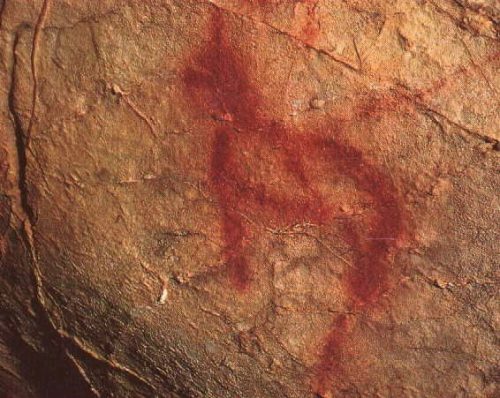
Le Cuzoul des Brasconies
“cuzoul” is an Occitan word, usually spelt cusol, which means cave. Frequently visited by cavers, the paintings have been very damaged.
There are red and black signs and dots and a red horse.
Length : 260 m.
 2
2La grotte Carriot
Named after Robert Carriot who discovered the paintings in 1969. Paintings and engravings, goats, deer, bulls, horses, bison.
Length : 200 m.
-
3
La grotte Christian
(classée Monument historique).
Named after the caver who discovered the cave in 1969 (Christian Kopiek). An engraved horse, a painted and engraved bison, dots, signs.Length : 200 m
-
4
La grotte des Faux-Monnayeurs
(The Counterfeiters Cave) The remains of a 17th century workshop for making counterfeit money were found in the cave.
The paintings were discovered by R. Restes and Michel Lorblanchet. Signs and dots.
Length : 150 m.
-
5
La grotte du Cantal
The paintings were discovered by Abbé Amédée Lemozi in 1920. Signs, hand prints, dots, ibex.
Length : over 160 m.
-
6
Le Cuzoul de Mélanie
“cuzoul” is an Occitan word, usually spelt cusol, which means cave. The engavings were discovered by Abbé Amédée Lemozi. A bison.
Length : 25 m.
 7
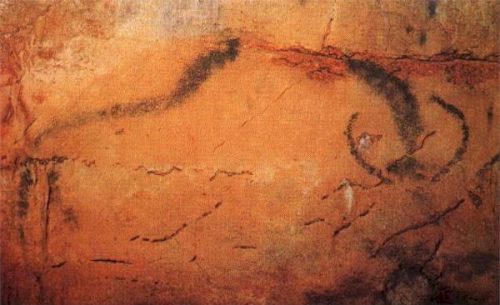
7La grotte Marcenac
(classed as an historic monument)
Discovered in 1850, it has been visited frequently and so has been damaged. The paintings and engravings were discovered in 1920 by Armand Viré, the canon of Albe and Abbé Lemozi. Deer, goats, signs, horses, bison.Length : 130 m.
 8
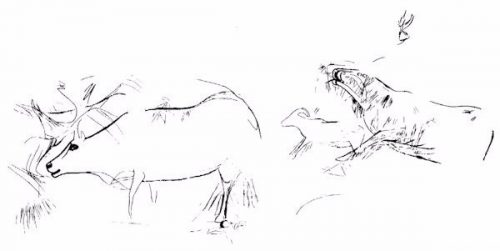
8La grotte de Sainte Eulalie
Engravings were discovered in 1920 by Abbé Amédée Lemozi. Badly preserved engravings : animal figures (deer, goats, horses, wild boar, bear) and signs.
Length : many kilometers. (the engravings are around the entrance).
-
9
La grotte du Papetier
Engravings discovered in 1968 by Michel Lorblanchet. Badly preserved engravings : a bull, three signs.
Length : 70 m.
 10
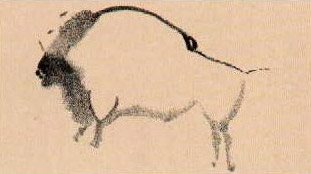
10La grotte du Moulin
The cave and the paintings were discovered in 1978 by Noël and Laurent Bun and Jean-Pierre Lagasquie. Paintings : black bison.
Length : 40 m. (from Michel Lorblanchet and Jean Pierre Lagasquie, in L’art des cavernes, Imprimerie Nationale, Paris 1984)
-
11
La grotte de la Bigourdane
Engravings of reindeer discovered by André Ipiens in 1981.
Length : 30 m (from Michel Lorblanchet et André Ipiens, in L’art des cavernes, Imprimerie Nationale, Paris 1984)
 12
12La grotte de Pergouset
(classed as an historic monument)
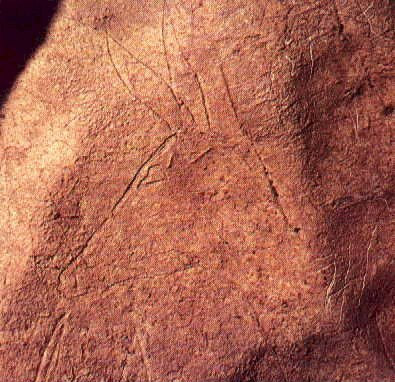
The cave and the engravings were discovered in 1964 by Guy Astruc and Gabriel Maury. Engravings : horses, bison, goats, imaginary animals, vulvas, a human shape.Length : 150 m (the prehistoric part only)
Consult the work about this cave, “La grotte ornée de Pergouset”, by Michel Lorblanchet
DAF Documents d’Archéologie Française, published by the Maison des Sciences de l’Homme, Paris 2001, 192 p, format 31 x 26 cm, numerous drawings and photographs in black and white. ISBN 2 7351 0802 3, ISSN 0769 010X.